
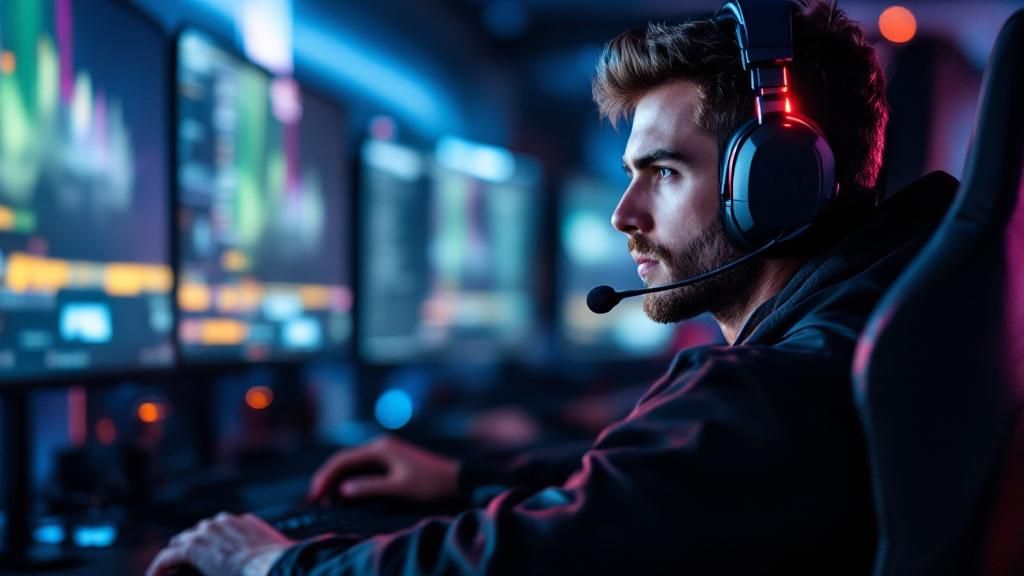
Whether you’re participating in esports tournaments or pursuing victory in intense multiplayer competitions, your gaming hardware can be the deciding factor between triumph and defeat. This comprehensive guide reveals the essential upgrades that serious gamers must master their discipline, from high-performance graphics cards and high-speed processors to responsive input devices and high-refresh monitors. Discover how choosing quality gear can enhance your performance advantage, minimise response delay, and ultimately enhance your overall gameplay to championship-winning levels.
GPU Improvements
The graphics processing unit (GPU) stands as the foundation of competitive gaming performance, significantly impacting fps and picture quality throughout competitive play. Modern competitive titles require GPUs designed to achieve consistently high frame rates at gaming resolutions, typically 1440p and above. Purchasing a top-tier graphics card from companies including NVIDIA or AMD helps you sustain the competitive edge necessary for rapid reflexes and better environmental perception throughout pivotal gameplay scenarios.
Frame rate consistency is absolutely essential in competitive settings where every millisecond matters considerably. A high-performance graphics card decreases frame drops and stuttering, delivering smooth, uninterrupted gameplay that allows you to respond instantaneously to opponent movements. Current-generation graphics cards equipped with high-end cooling technology and overclocking capabilities provide the thermal headroom necessary for consistent performance during extended gaming sessions, preventing thermal throttling that could undermine your competitive edge.
Ray tracing technology, although visually striking, remains secondary to raw performance in competitive gaming contexts. Serious competitors typically deactivate ray tracing to maximise frame rates, prioritising speed over graphical fidelity. Instead, concentrate on choosing GPUs with considerable memory capacity, ideally 10GB or more, ensuring smooth performance across resource-intensive games without VRAM constraints that could hinder your competitive performance.
The resolution and refresh rate pairing you aim for directly determines the GPU requirements you need for peak performance. Esports enthusiasts targeting 1440p gaming at 240Hz need significantly more powerful hardware than those aiming for 144Hz at the same resolution. Grasping these performance limits enables you to choose the right GPU level, guaranteeing your spending aligns perfectly with your particular esports goals and ambitions.
NVIDIA’s latest RTX 40-series and AMD’s RDFS 7000-series graphics cards showcase the pinnacle of high-end gaming capability, delivering outstanding frame rates across virtually all modern competitive titles. These high-end solutions include sophisticated capabilities including DLSS 3 technology and FSR 3 support, which strategically enhance performance without compromising visual quality. Choosing premium graphics cards guarantees sustained performance, guaranteeing your hardware maintains performance for several years of intense competitive play.
Budget-conscious competitors shouldn’t worry, as mainstream graphics cards from both manufacturers provide exceptional value propositions for competitive gaming. Cards like NVIDIA’s RTX 4070 or AMD’s RX 7800 XT deliver outstanding performance at competitive prices, making fast-paced esports play accessible without astronomical expenditure. These practical options combine performance requirements with financial considerations, allowing dedicated competitors to improve their hardware responsibly.
Core Processing Unit and RAM Enhancement
Processor Selection for Competitive Gaming
The processor core serves as the backbone of your gaming setup, handling all aspects of game logic to physics calculations and machine learning processes. For esports competition, you’ll want a processor capable of delivering reliable fps whilst keeping low latency. Today’s multi-core CPUs from Intel and AMD offer exceptional performance, with higher core counts enabling better performance during intensive workloads. Investing in a quality processor ensures your system won’t become a limiting factor, allowing your GPU to perform at its full potential and keeping you competitive.
When choosing your processor, evaluate models specifically optimised for gaming workloads rather than purely server-oriented chips. The latest generation processors offer improved IPC and enhanced thermal efficiency, meaning superior responsiveness without excessive heat generation. Clock speeds between 4.5 and 5.5 GHz are ideal for most demanding games, providing the responsiveness required for split-second decision-making. Ensure your selected processor complements your motherboard and cooling solution to sustain optimal performance throughout prolonged play sessions.
RAM Configuration and Performance
Memory bandwidth proves vital in competitive gaming performance, significantly impacting how quickly your processor can retrieve the data it needs. Modern competitive games perform substantially better with 32GB of RAM, providing ample headroom for simultaneous applications and tasks running in the background. Opt for DDR5 or DDR4 memory with speeds of 3600MHz or higher, as quicker RAM lowers response times and enhances frame stability. Dual-channel configuration is vital, meaning you should install RAM in pairs to boost data throughput and ensure optimal performance across all gaming scenarios.
Beyond performance capabilities, focus on low-latency CAS ratings, typically between 14 and 18 for competitive setups. RGB lighting exists for visual appeal only and shouldn’t influence your buying choice; concentrate on dependability and performance data. Quality brands with comprehensive warranty protection offer reassurance for your purchase. Correct memory installation in the appropriate memory slots, combined with appropriate BIOS settings, maximises the capabilities of your RAM setup and contributes meaningfully to your overall competitive advantage.
Heat Regulation and Operational Stability
Efficient cooling significantly influences your processor’s ability to maintain stable performance during demanding competitive gameplay. High-quality air coolers or liquid cooling systems prevent thermal throttling, which happens when processors reduce clock speeds to manage excessive heat. Opting for high-end cooling solutions guarantees your CPU runs at optimal temperatures, typically between 60 and 75 degrees Celsius during gaming. Proper airflow within your case, combined with quality thermal paste application, optimises heat dissipation and preserves the stability required for competitive gameplay.
System reliability becomes paramount when milliseconds decide victory or defeat in high-stakes competition. Overclocking can provide modest performance improvements, but only when approached cautiously with proper thermal management and voltage control. Consistent oversight of temperatures and system stability through stress testing prevents sudden failures during crucial matches. High-grade power units with sufficient wattage headroom ensure consistent voltage delivery to your components, eliminating sources of instability. Prioritise stability over aggressive overclocking to maintain reliable performance when it counts most.
Peripheral Devices and Display Technology
Gaming Input Devices and Mechanical Keyboards
A high-accuracy gaming mouse is essential for success in competition, particularly in intense shooter titles and real-time strategy games. Look for mice equipped with customisable sensitivity levels, remappable controls, and minimal weight that allow fast, accurate inputs without strain. Leading brands offer low-latency sensors, ensuring your clicks respond immediately. Mechanical keyboards provide enhanced response times versus membrane alternatives, with programmable actuation allowing you to tailor actuation force and key depth. These peripherals significantly affect your input speed and gameplay reliability, making them sound purchases for competitive players.
Ergonomic design should always be considered when selecting gaming peripherals, as extended competitive play demand both comfort and performance. Quality mice and keyboards reduce strain injuries and preserve your accuracy during extended tournaments. Proper cable management and wireless connectivity options provide adaptability in your gaming setup, though wired options generally deliver marginally lower latency. Configuration software enables you to programme macros and adjust sensitivity profiles for various titles. High-end peripherals may appear costly at first, but their durability and performance advantages justify the investment for serious competitive players looking for dependable, consistent gear.
Display Specifications and Refresh Rates
Display technology represents one of the most vital components for esports performance, shaping your visual feedback and reaction capabilities. Monitors with elevated refresh rates, ranging from 144Hz to 360Hz, provide significantly smoother gameplay versus conventional 60Hz monitors. Reduced latency means you detect enemy movements with greater precision, offering vital fractions of a second for tactical decisions. Resolution considerations must reconcile visual clarity with frame rates; whilst 1440p provides excellent detail, 1080p at elevated Hz generally benefits esports competition better. IPS-type displays offer superior colour accuracy, though TN panels traditionally offered quicker pixel transitions, though contemporary IPS solutions has reduced the difference substantially.
Input lag, measured in milliseconds, significantly influences how quickly your monitor renders updated frames, reducing ghosting and motion blur during intense gameplay. Aim for monitors providing 1ms or lower response times for optimal competitive performance. Adaptive sync technologies like FreeSync and G-Sync eliminate screen tearing and stuttering, creating seamless visual experiences that enhance your competitive advantage. Curved displays can enhance immersion and reduce eye strain throughout marathon gaming sessions. When selecting your monitor, prioritise refresh rate and response time over resolution, as these factors more substantially impact competitive performance than pixel density alone.
Sound Gear and Headsets
Competitive gaming requires superior sound quality, as sound cues frequently decide success or failure in strategy-based shooters and team-based games. High-quality gaming headsets deliver precise directional audio, enabling you to pinpoint enemy locations through footsteps and gunfire. Low-delay wireless systems ensures audio synchronisation with on-screen gameplay, eliminating distracting delays. Surround sound capabilities, whether simulated or authentic 7.1 configurations, provide spatial awareness that substantially improves gaming performance. Noise-cancellation technology allow you to focus by eliminating environmental distractions, whilst soft cushioning ensures you can use headphones throughout extended competitive sessions without strain or exhaustion.
Microphone quality plays an equal role for team-oriented competitive play, where effective communication determines tactical success. Look for headsets featuring noise-cancellation technology that eliminates unwanted noise, allowing teammates to hear your callouts clearly. Flexible or detachable microphone booms enable best positioning for crystal-clear voice transmission. Professional-grade audio components ensure your team receives premium sound quality during pivotal moments. Choosing dedicated gaming audio equipment rather than budget alternatives reflects commitment to competitive performance, improving your own performance alongside your team’s coordination, communication, and overall effectiveness during high-pressure tournaments.
